
 English
 العربية
 Français
 Português
 Русский
 Español
 Myanmar
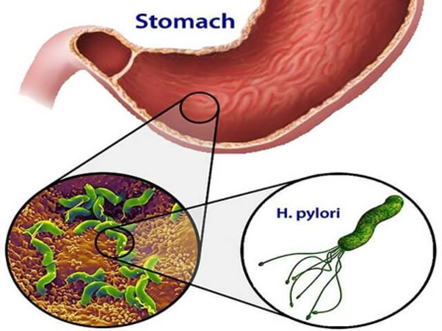
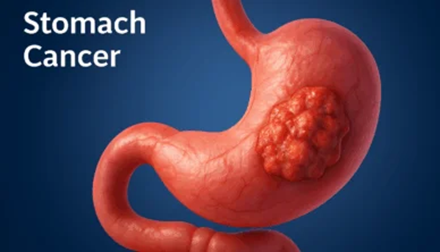
Helicobacter pylori (H. pylori) is the leading cause of peptic ulcers and a major risk factor for gastric cancer. Therefore, monitoring global trends in H. pylori infection is of great importance for public health planning aimed at reducing the incidence of gastric cancer.
Helicobacter pylori (H. pylori) is a common bacterium that lives in the lining of the stomach and is typically transmitted through contaminated water, food, or direct contact. This infection can lead to health problems such as peptic ulcers and, more importantly, an increased risk of gastric cancer—one of the leading causes of cancer-related deaths worldwide. According to the World Health Organization (WHO), about 50% of the global population has been infected with H. pylori at some point in their lives. However, recent studies show that infection trends are shifting, bringing hope for improved control of gastric cancer.
A new study has analyzed long-term trends in Helicobacter pylori infection rates around the world in both adults and children/teenagers, and also looked at how these trends relate to the rates of gastric cancer. The study, based on a systematic review and meta-analysis of 1,748 articles from 111 countries, offers a detailed view of how things have changed over time. The researchers used multivariable regression analysis to adjust the overall infection rates, and collected data on stomach cancer from the Global Burden of Disease Study and the Cancer Incidence in Five Continents database (1).
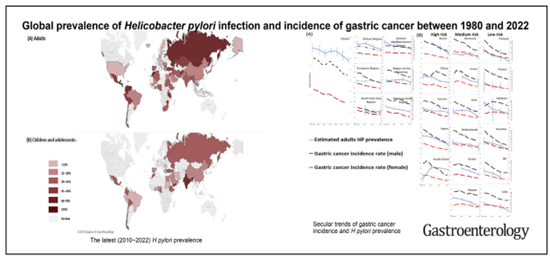
Results showed that the global crude prevalence of H. pylori infection in adults decreased from 52.6% (95% CI: 49.6%–55.6%) before 1990 to 43.9% (42.3%–45.5%) during the 2015–2022 period. This represents a significant decline of about 15.9% (–20.5% to –11.3%) over the past three decades. The reduction was mainly observed in the Western Pacific, Southeast Asia, and Africa, where improvements in hygiene, access to clean water, and health education programs may have contributed positively. However, in other regions like the Americas or the Eastern Mediterranean, the change was minimal, highlighting geographical disparities in control efforts.
In contrast, the situation among children and adolescents is more concerning. The infection rate in this group remained high at 35.1% (30.5%–40.1%) during 2015–2022, with no significant decrease observed in any WHO-defined region. This suggests that current prevention strategies may not be effective in younger age groups, where infections often occur early in life through household or environmental exposure. Children infected with H. pylori face a higher risk of developing chronic gastric problems in adulthood, emphasizing the need for earlier intervention.
A key highlight of the study is the association between declining H. pylori infection rates and gastric cancer incidence. Data show that gastric cancer rates have also dropped globally and in many countries where H. pylori prevalence has declined. For instance, in countries like Japan and South Korea, where there are strong screening and treatment programs for H. pylori, gastric cancer rates have improved significantly. The study proposes that reducing H. pylori infection through public health strategies may be a key to lowering the global burden of gastric cancer. However, the researchers emphasize that this hypothesis needs to be confirmed through large-scale clinical trials to ensure safety and effectiveness, as H. pylori eradication may have an impact on the gut microbiome. That said, the study also has several limitations. The heterogeneity among included studies suggests differences in infection rates across countries and over time. Variations in testing methods, sampling techniques, criteria, and study populations also contributed to this inconsistency.
In summary, screening and treatment of H. pylori are not only crucial for managing peptic ulcer disease but also represent a key strategy for reducing the burden of gastric cancer. However, more prevention efforts need to be directed toward children and adolescents—a population group that has shown little improvement over the past 30 years. Currently, proton pump inhibitors (PPIs) remain essential components of H. pylori treatment regimens according to many international guidelines, such as the American College of Gastroenterology (ACG) guidelines (2). Recognizing this importance, Vinphaco is proud to offer high-quality PPI products to international clients, including lyophilized injection powders like VINXIUM (Esomeprazole 40mg), OMEPRAZOL (Omeprazole sodium 40mg), PANTOPRAZOL (Pantoprazole 40mg), and ESOMEPRAZOL(Esomeprazole 40mg)—ensuring effectiveness, safety, and cost-efficiency in the treatment of H. pylori infection.
References:
1. Chen YC, Malfertheiner P, Yu HT, et al. Global Prevalence of Helicobacter pylori Infection and Incidence of Gastric Cancer Between 1980 and 2022. Gastroenterology. 2024;166(4):605-619. doi:10.1053/j.gastro.2023.12.022
2. Am J Gastroenterol 2024;119:1730–1753. https://doi.org/10.14309/ajg.0000000000002968; published online September 4, 2024
3. Shirani, M., Pakzad, R., Haddadi, M.H. et al. The global prevalence of gastric cancer in Helicobacter pylori-infected individuals: a systematic review and meta-analysis. BMC Infect Dis 23, 543 (2023). https://doi.org/10.1186/s12879-023-08504-5