
 English
 Français
 Português
 Русский
 Español
 Uzbek
Uzbek
 Myanmar
Sepsis and septic shock remain among the most critical medical emergencies worldwide, carrying a high risk of mortality despite significant advances in intensive care medicine. In the fight to restore adequate tissue perfusion and maintain hemodynamic stability, vasopressor therapy remains a cornerstone of treatment.
The recently released Surviving Sepsis Campaign (SSC) 2026 International Guidelines introduce several important changes compared with the 2021 version, reflecting a shift toward personalized medicine and more practical recommendations for healthcare systems with varying resource availability.
As a trusted partner in the global pharmaceutical supply chain, we recognize the importance of staying current with evolving clinical guidelines. This article highlights five key updates in vasopressor management from SSC 2026 to help healthcare professionals optimize treatment strategies and resource allocation.
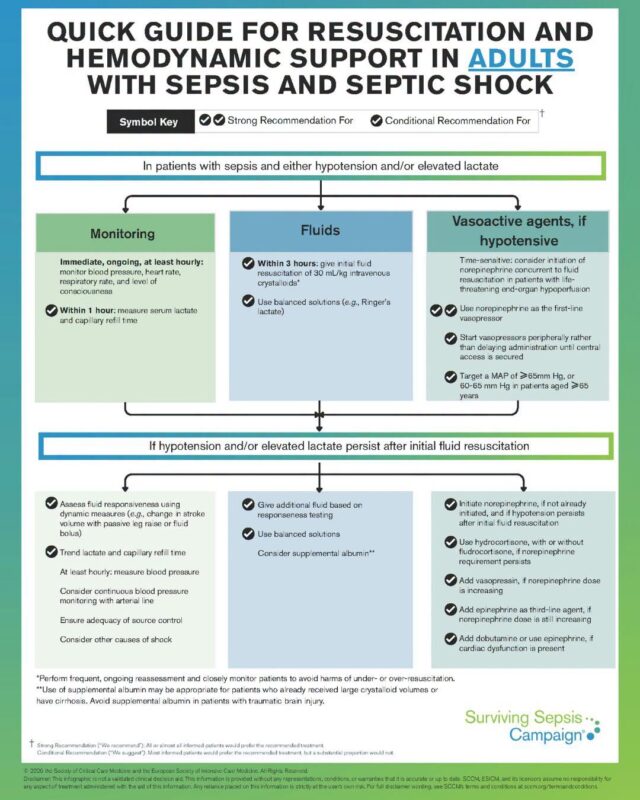
1. From a One-Size-Fits-All Approach to Personalized Hemodynamic Management
Flexible Mean Arterial Pressure (MAP) Targets for Older Adults
While the SSC 2021 guidelines recommended maintaining a MAP of 65 mmHg for most patients with septic shock, the SSC 2026 update adopts a more individualized approach.
Based on the concept of permissive hypotension, SSC 2026 suggests considering a lower MAP target of 60–65 mmHg in patients aged 65 years and older. Current evidence indicates that this strategy may reduce vasopressor exposure and associated adverse effects without increasing mortality in elderly patients.
First-Line Vasopressor Selection in Septic Shock with Cardiac Dysfunction
For the first time, SSC provides specific guidance for patients with septic shock complicated by myocardial dysfunction.
The 2026 guideline suggests using either Norepinephrine or Epinephrine as first-line vasopressors, with the choice guided by heart rate:
- Norepinephrine is preferred in patients with tachycardia or tachyarrhythmias.
- Epinephrine, due to its positive chronotropic and inotropic effects, may be a better option in patients with bradycardia.
This recommendation reflects a more physiologically tailored approach to vasopressor selection.
2. Updated Recommendations for Norepinephrine and Vasopressin
Norepinephrine remains the preferred first-line vasopressor in septic shock. However, its superiority over all alternative vasopressors has been moderated compared with SSC 2021.
In SSC 2021, norepinephrine received a strong recommendation over all other vasopressors. In SSC 2026, norepinephrine is still favored over dopamine and epinephrine, but only receives a weak recommendation when compared with vasopressin or angiotensin II.
This adjustment reflects emerging evidence suggesting that vasopressin may reduce the need for renal replacement therapy in some patients. Nevertheless, norepinephrine remains the primary recommendation largely because of health-economic considerations: vasopressin and angiotensin II are generally more expensive and less accessible, particularly in resource-limited healthcare settings.
3. Optimized Combination Therapy for Real-World Resource Settings
Adding a second or third vasopressor when norepinephrine alone is insufficient remains standard practice.
Traditionally, treatment escalation follows this sequence:
- Add vasopressin to norepinephrine.
- Add epinephrine if target MAP is still not achieved.
To enhance flexibility and reflect real-world resource constraints, SSC 2026 introduces an important clarification:
When vasopressin is unavailable, epinephrine may be added directly to norepinephrine.
This recommendation reinforces the critical role of epinephrine as an effective, accessible, and cost-efficient alternative, particularly in regions where vasopressin is not readily available.
4. Earlier Vasopressor Initiation Through Peripheral Access and Concurrent Fluid Resuscitation
In septic shock, every minute counts.
SSC 2026 continues to support short-term peripheral intravenous administration of vasopressors to rapidly correct hypotension rather than delaying treatment while awaiting central venous catheter placement.
A notable advancement in the 2026 guideline is greater flexibility regarding treatment timing. In patients with signs of severe hemodynamic instability—such as profound hypotension, mottled skin, cyanosis, or persistent tachycardia—clinicians may consider initiating vasopressor therapy immediately and concurrently with crystalloid resuscitation, rather than waiting until initial fluid administration has been completed.
This recommendation underscores the importance of early hemodynamic stabilization in critically ill patients.
5. Clearer Positioning of Emerging Rescue Therapies
SSC 2026 also reassesses several adjunctive therapies that have attracted growing interest but currently lack robust evidence.
Methylene Blue
Methylene blue may improve blood pressure in refractory vasodilatory shock; however, SSC 2026 concludes that there is insufficient evidence to determine whether it improves survival or other clinically meaningful outcomes.
Oral Midodrine
Current evidence remains inadequate to support the routine use of oral midodrine as a strategy for earlier discontinuation of intravenous vasopressors.
Beta-Blockers
SSC 2026 suggests against the use of beta-blockers such as esmolol or landiolol as a treatment strategy for septic shock. Available evidence does not demonstrate clear clinical benefits and may be associated with prolonged vasopressor dependence.
Quick Comparison of Vasopressor Recommendations
SSC 2021 vs. SSC 2026
| Category | SSC 2021 | SSC 2026 | Key Change |
|---|---|---|---|
| MAP Target | 65 mmHg for all patients | 65 mmHg (general population); 60–65 mmHg for patients ≥65 years | New individualized approach to reduce vasopressor exposure in elderly patients |
| First-Line Vasopressor | Strong recommendation for norepinephrine over all alternatives | Weak recommendation for norepinephrine versus vasopressin/angiotensin II | Downgraded strength of recommendation; acknowledges comparable efficacy of alternative agents |
| Combination Therapy | Add vasopressin, then epinephrine if MAP remains inadequate | Add vasopressin, then epinephrine; if vasopressin unavailable, add epinephrine directly to norepinephrine | Improved practicality for resource-limited settings |
| Cardiac Dysfunction | No clearly defined first-line recommendation | Norepinephrine or epinephrine as first-line therapy depending on heart rate | New personalized recommendation |
| Timing of Vasopressor Initiation | Generally after initial fluid resuscitation | May be initiated concurrently with crystalloid fluids in unstable shock | Emphasizes earlier intervention |
| Methylene Blue / Midodrine | Not clearly addressed | Insufficient evidence to support routine recommendation | Newly evaluated therapies |
Conclusion
The SSC 2026 update reflects a significant evolution from a standardized treatment paradigm toward a more individualized and resource-conscious approach to septic shock management. Personalized MAP targets, tailored vasopressor selection in patients with cardiac dysfunction, and greater flexibility in treatment escalation demonstrate a growing focus on optimizing outcomes for diverse patient populations and healthcare environments.
A particularly important message is that while vasopressin has gained recognition for its clinical value, its adoption may be constrained by cost and availability, whereas epinephrine remains a highly effective and widely accessible alternative, especially in developing countries and resource-limited settings.
As an integral part of the global healthcare supply chain, we remain committed to ensuring a stable supply of essential vasopressors, including norepinephrine and epinephrine, while continuously expanding our portfolio to provide effective, affordable, and accessible solutions for the management of septic shock worldwide.
References
- Surviving Sepsis Campaign: International Guidelines for Management of Sepsis and Septic Shock 2026.
- Surviving Sepsis Campaign Guidelines 2021.